At the January AI workshop I was running in Austin, I pulled up Perplexity’s new AI browser (Comet) and did a live demo.
It had some rough edges. The interface was a bit clunky. A few things didn’t work perfectly.
I looked around the room and saw the face. You know the face. The one that says, “eh, I’ll wait until this is actually ready.”
I’ve been in enough of these rooms to know what that face costs people.
The Most Expensive Mistake in AI Adoption
Here’s the rule I’ve landed on after watching hundreds of people try to get into AI tools:
If something feels rough right now, that’s the worst version it will ever be.
These tools are improving so fast that a product that feels half-baked today is often genuinely impressive in 60 days. Not “a little better.” Sometimes completely different.
The problem is that most people use current roughness as a signal to wait. But the window to get ahead of a tool is exactly when it’s imperfect. That’s when the early adopters are learning it, when the competition hasn’t touched it yet, when the advantage is still available.
By the time it’s polished and covered on TechCrunch, everybody’s on it.
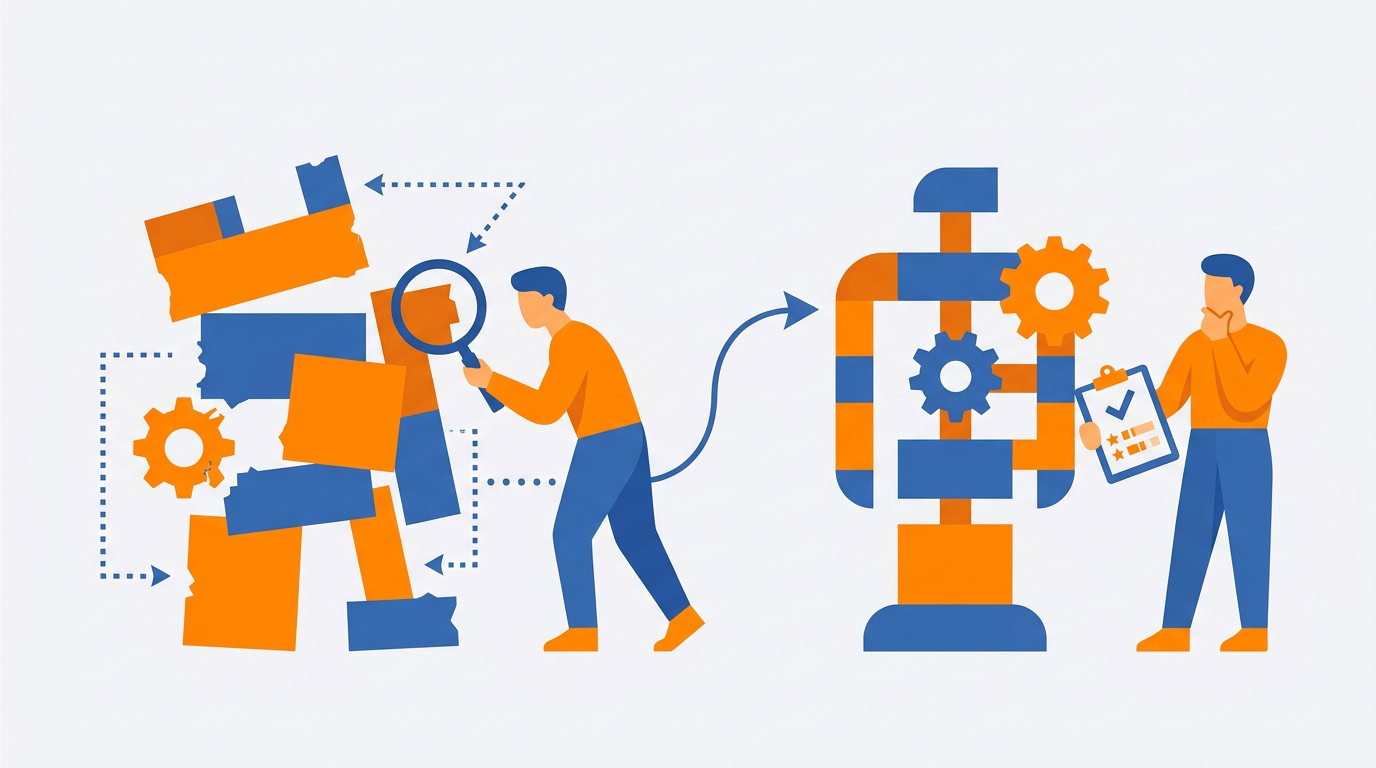
The Imperfect Demo Moment
A few weeks later I was presenting at a conference. I showed them how AI can respond to customer texts, answer phone calls, and manage appointment bookings.
It wasn’t magic. Some of the demos had rough moments. And I realized partway through that I’d been living in a bubble. I was so used to working with these tools daily that I forgot what they look like to someone seeing them for the first time.
The room was skeptical. But the people willing to sit with imperfect were the ones who leaned in.
That’s what separates early adopters from everyone else. Not technical skill. Tolerance for messy.
The First 30 Days Are Always Messy
The first stretch with any new AI setup is going to be messy.
You’re learning tools from scratch. Building workflows you haven’t built before. Making mistakes. Things aren’t running smoothly.
That’s not a bug. That’s the deal.
Push through it, and you end up with automations that make life significantly easier, the kind of stuff that wouldn’t exist if you waited for perfect. Because you were willing to sit with rough and keep going.
This is what I call the one-tweak-a-week approach to AI adoption. You don’t try to overhaul everything at once. You do one more thing with AI this week than you did last week. And you let that compound.
That’s the pace that actually works. Not the sprint where you try three new tools in a week and burn out. One thing. Learn it. Let it get better. Add the next thing.
Where Most People Are in Their AI Journey
I teach a simple three-level progression for AI:
Level 1: AI Assisted. You’re using AI for individual tasks. Asking ChatGPT to rewrite an email, using Midjourney for images. Occasional use, mostly prompting.
Level 2: AI Workflows. You’re connecting tools together. AI that does multiple steps automatically. Things that run on their own.
Level 3: Building Agents. AI that acts like a teammate. Handles ongoing responsibilities. Knows your context. Proactively does things on your behalf.
Most people are stuck between Level 1 and Level 2. And the reason they’re stuck is usually that they tried something, it was rough, they backed off.
The tools are not the bottleneck. Tolerance for messy is.
Do This This Week
Open the last AI tool you closed because it felt janky. Give it 20 minutes. Not a rebuild. A retry.
Write down one thing it can do today that it couldn’t do last time. Then use it on a real workflow you already run by hand. If it saves you one step, keep it. If it adds steps, drop it.
Put the retry on the calendar so it doesn’t become another tab you forget. One block is enough. And if you’re already wrecked by Friday, don’t stack a second experiment on top.
What to Actually Do
Go back to one tool you tried before and dismissed.
Doesn’t matter if it was three months ago or six months ago. Try it again this week. I’ll bet it’s measurably better.
And if it’s still rough, that’s fine. Spend 20 minutes with it anyway. Let yourself get a little familiar. Check it again in 30 days.
There’s no clean entry point with AI tools. The people who are ahead right now got ahead during the janky phase. They didn’t wait for perfect.
You don’t have to either. Twenty minutes is enough. You don’t need a perfect setup to learn the tool.
If you want a simple first filter so the new tools don’t eat the week, start with Focus Filter.
Recommended for you
Want the full system? 25X is the flagship productivity system we teach.
Explore 25X →