I added plants to my workspace. It felt noticeably more soothing and calming. That is my own experience, and I want to be honest about the size of it. I changed one thing in the room. The room felt better to be in.
A productive desk doesn’t have to be an empty desk. Alongside removing distracting clutter, keep a plant, a picture, or a meaningful object that makes the space feel comfortable and personal. Remove one distracting item. Keep or add one intentional personal touch.
Productivity is about what you do, and it’s also about where you do it. Treat your physical workspace as part of your productivity system. Improve the conditions for focus. If time management is already working for you, keep it. If an app is already helping, keep that too. Put the workspace in that same system. The conditions around you change how hard focus is.
Have you been trying to fix a hard workday only by managing your hours better? Look at the place those hours happen.
Think of yourself as a plant, and think of your workspace as its growing conditions. A plant struggles without suitable light, soil, and room to grow. An uncomfortable, distracting workspace makes focused work harder. Ask what conditions would help you thrive. Treat the plant comparison as an illustration. Look for one environmental obstacle before you try to work harder.
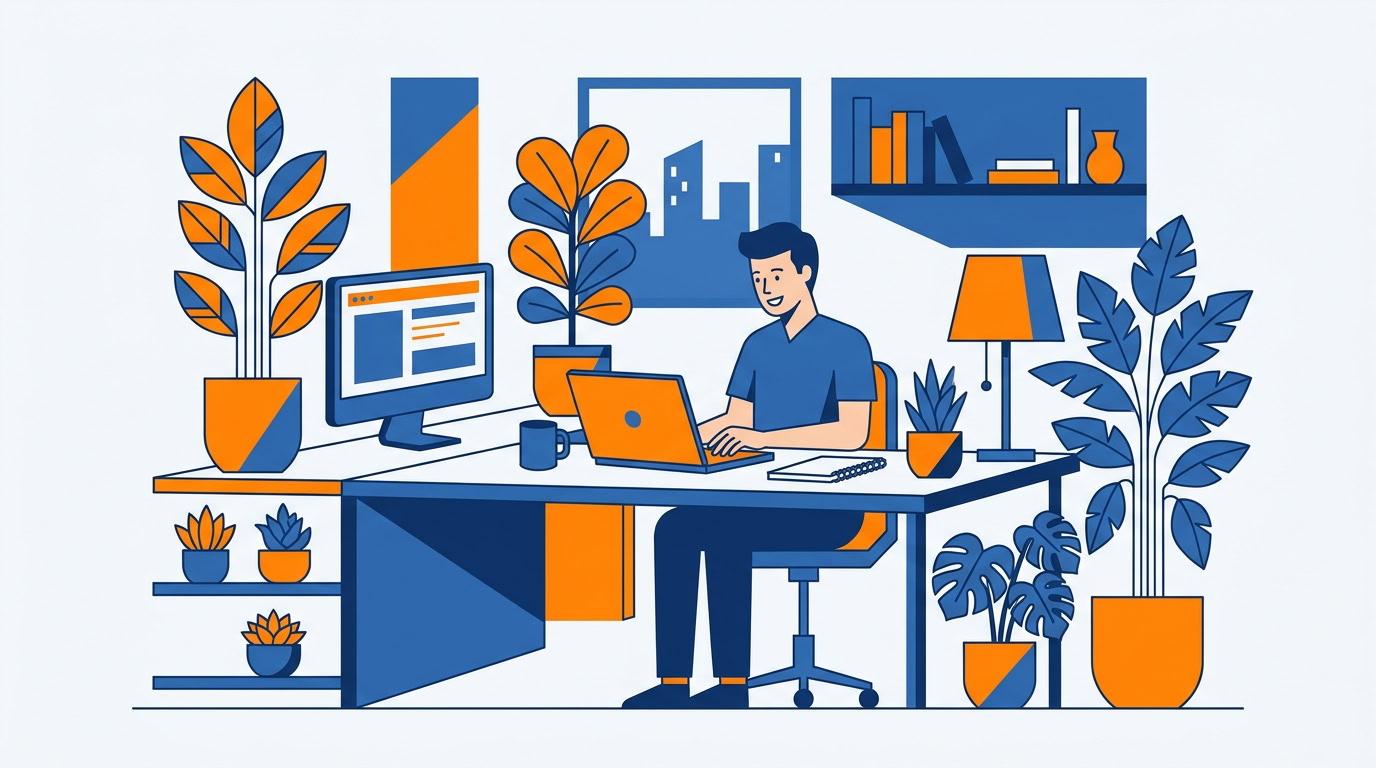
Four lenses for the room you have
There’s no formal name for this. Use it as a checklist. Lighting, ergonomics, clutter, and personal touches. Walk through the room you actually work in. Choose the weakest area, and improve that area first.
Lighting
Access to daylight is worth having where you can get it. If your desk can move closer to a window, move it. If your desk can’t move closer to a window, daylight doesn’t have to become an all-or-nothing workspace upgrade. Take breaks outside. Where it’s practical, work outdoors for part of the day. When natural light is unavailable, use better artificial lighting.
I mention mood, energy, and sleep as reasons to get outside during a workday. I’m no medical doctor. Try an outdoor break and notice those three things for yourself. Better artificial lighting is the move when daylight is unavailable. Keep the outdoor time and the lighting as two separate improvements. A lamp helps the room you’re in. The break outside is its own experiment.
Can you take that outdoor break on your next workday? If you can’t control the office layout, the break is still yours to take.
Ergonomics
A supportive chair matters, and so does the position of your desk and screen. I’m keeping this general on purpose. I’m no ergonomics specialist. Use a supportive chair. Position the desk and the screen so they support how you work. If the chair is what makes the work harder, adjust the chair. If the screen position is the problem, move the screen. Start with the furniture you already own.
How does your body feel after a real stretch of work in that chair?
Clutter
A messy desk greets you as visual noise. Leave it overnight and it competes for your attention before the work does. The fix is small enough to finish before you leave. Do a five-minute desk reset at the end of each workday. Five minutes. That’s it. Tidy the space. Leave only the essentials within reach.
The payoff arrives the next morning. You return to a workspace that doesn’t immediately compete for your attention. Add the five-minute reset to your shutdown routine, and notice how starting work feels the next day.
What within reach is essential to the work, and what is sitting there out of habit?
Personal touches
After the reset, the room should still feel inviting. This is the part I can talk about from my own desk. Adding plants to my workspace made it feel noticeably more soothing and calming. A picture can play that role. A meaningful object works too. Choose one, and let it stay.
Remove the distracting item. Keep the personal one. The desk can be quiet without going sterile.
Headphones, or cleaner audio
Match your noise solution to the problem.
When surrounding sound distracts you, use noise-canceling headphones. The goal is quieter listening, so you can stay with the work. The room may still be noisy. Your ears get the quieter version.
When background noise interferes with what other people hear during your online presentations or meetings, use AI noise-removal software. The software cleans the outgoing audio. The room stays as loud as it was. You have fixed what they hear. Quieter listening is a separate job.
Do you need quieter listening, cleaner outgoing audio, or both? Decide before you choose a tool. Headphones leave their side of the call untouched. Noise-removal software leaves the distraction in your own ears untouched. If both problems are real, use both tools, and expect each one to do only its own job.
Change one thing today
You don’t need an office redesign to improve your working environment. Time and money are real reasons to hesitate. A workspace project turns expensive quickly, and it asks for more of your day than a single adjustment. Start with a manageable change, using what you already have.
Adjust your chair. Clear your desk. Improve your lighting. Add a plant.
Identify one feature of your workspace that makes work harder, and change it today. Use the four lenses if you need help choosing. Take the weakest one. Make the change before the day ends. Tomorrow morning, notice the room before you touch the task list.
Recommended for you
Struggling to focus? The Focus Filter shows you what actually matters each day.
See the Focus Filter →