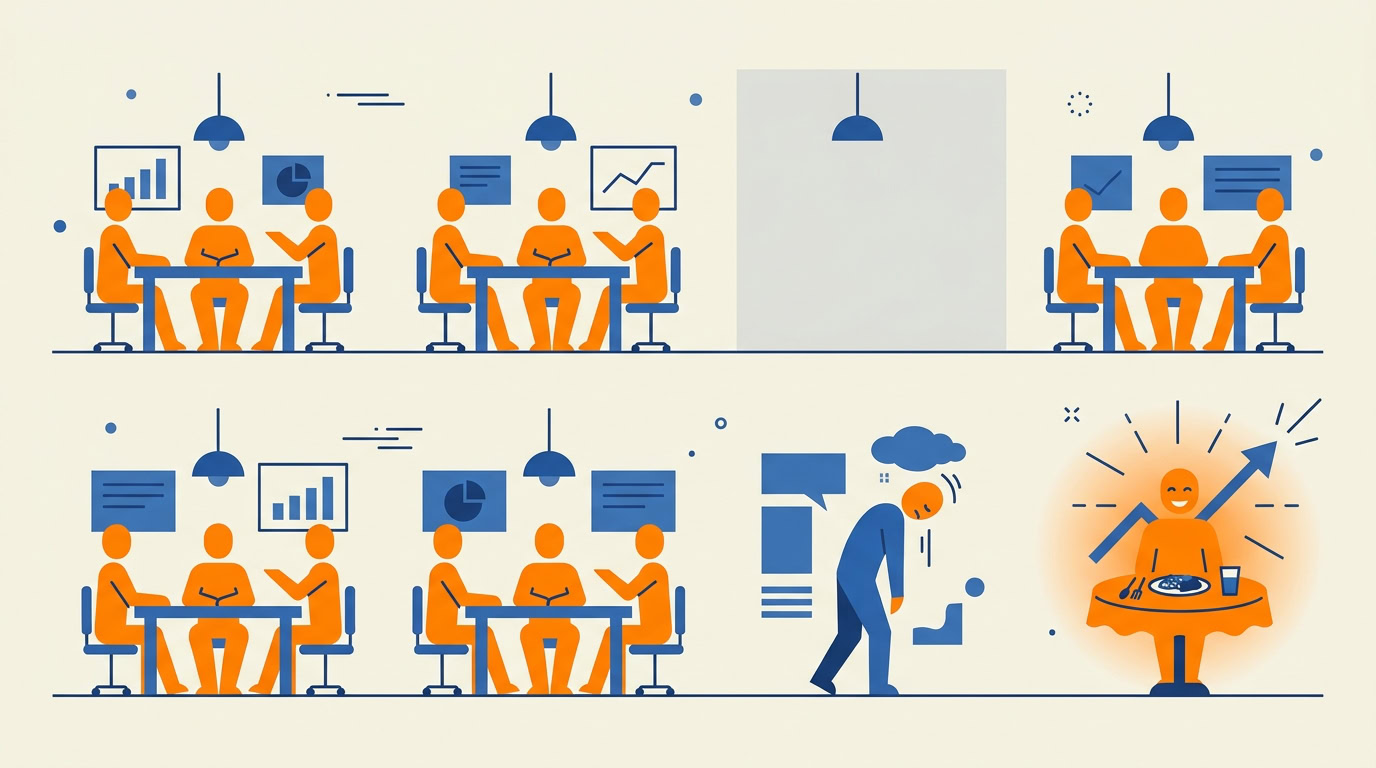
Right before a vacation, I squeezed roughly four meetings into 11 a.m. to 3 p.m. Short breaks. No lunch. I finished depleted.
Dinner that evening was with three friends I hadn’t seen in a while. On the walk home, I had energy I didn’t have at 3 p.m.
I used to think recovery meant being alone or doing nothing. Time with the right people gave me energy back. I still needed the lunch I skipped. Food, sleep, and breaks belong in the day too. Name one relationship or social plan that leaves you more energized, and make room for it.
A full calendar can still exhaust you
I use a frame I call TEA: time, energy, and attention. You can manage time well and still end exhausted, because energy ran out.
Creative writing is where I notice it. I can sustain one strong writing session in a day. I can’t repeat that same session morning, afternoon, and evening.
An open slot tells me the time is free. My energy for a second writing session may already be gone.
The goal is meaningful work I can repeat. Before you fill tomorrow, find one demanding task sitting in a low-energy window and one recovery break that is missing.
Hero mode
Hero mode is simple. Demanding work goes in the window where I’m sharpest. Lately mine has been roughly 10 a.m. to noon.
List ten tasks you do most weeks. Label each H, M, or L for high, medium, or low energy. Are the H tasks landing while you’re sharp? An empty afternoon is a lousy home for deep work if that’s your dip. Move one high-energy task.
On a good window I can focus for about 90 minutes to two hours. That’s my experience. I’m no doctor.
Four energy layers
Sometimes the answer really is sleep. I still check four layers, so I fix the one that’s actually thin.
Physical energy. Sleep, movement, food, and recovery all sit here. Skipping lunch hit me on this layer.
Emotional energy. Stress, relationships, and emotional load. The four meetings took from this. Dinner with three friends gave some back.
Mental energy. Overload, ambiguity, and decisions.
Spiritual energy. Meaning, identity, and alignment with what you care about. Religion might be part of that for you. I use this layer as a coaching frame on my own weeks.
Choose the biggest bottleneck and write one small improvement for this week.
Two leaks I keep paying for
New AI tools excite me and overload me. The pace of change, the pile of tools, the stimulation of trying things. A tool can be useful and still cost attention. Is your AI exploration helping you finish meaningful work, or adding mental load? I deal with that overload myself.
Ambiguity is the quieter leak. No finish line, and I tweak and rearrange after the useful progress has slowed. I struggle with this. Defining done is an energy decision and a project decision.
Pick one lingering project and write what done looks like before you touch it again. If AI is part of that project, write the finish line before you experiment further.
Ask the last three days
Before I design a week, I audit the last three days with three questions.
When did I feel sharpest?
What drained me more than I expected?
What gave me energy back?
I look at physical energy, concentration, and emotional steadiness. You can finish a lot and still be flat. Treat the answers as a gut check, then plan for the person those three days described. Ignore the imaginary you who is equally focused all day.
Write the answers in a note before your next planning session.
Recovery menu
A break is easier when the choice is already made. I keep a recovery menu where I can see it.
Two minutes. I get up and fetch a glass of water. I’m away from the screen.
Ten minutes. I walk.
Twenty minutes. I take a longer walk, away from the workspace.
I want movement, a screen break, and a change of environment. Your menu should match what restores you. People kept asking what a break should be, so I made a menu. Some people keep theirs as a desktop background.
Make a two-minute option, a ten-minute option, and a twenty-minute option. Keep the menu visible. Test one default this week.
Mine is a ten-minute walk after lunch. Familiar route. No phone, no headphones, no audio. I call it my Daily Reset. I tried to hold an evening walk and my evenings were often booked, so the habit wouldn’t stick. I moved it to midday.
I grew up with the Dutch practice of uitwaaien, and the lunch walk is my version of that. I stop taking information in. I come back to the desk more able to focus. Try one device-free walk after lunch and notice how you feel when you sit down again.
Two lists
Write what occupied most of the last three days. Write the values that matter most to you. Look at both.
Does the second list show up anywhere in the first?
Work and bills can own a lot of hours. Let them. What you care about still needs a deliberate spot, including a value like quality time. That dinner was a small block of it, and it restored me. Schedule one small action for a value that has been living on leftovers.
Five days
Rate your energy from 1 to 10 at a few points each day, for five days. Find the strongest window. Put one important, demanding task in it. Add one recovery ritual and keep it.
Then write an Energy Blueprint: your biggest energy bottleneck, and one commitment you can remove, renegotiate, or buffer.
Tonight, answer those three questions in a note. Tomorrow, put the thing that gave you energy back on the calendar.
Recommended for you
Struggling to focus? The Focus Filter shows you what actually matters each day.
See the Focus Filter →