In October 2024 I reviewed my month. It was already packed. Personal events. Travel.
You know that feeling when the month is full before it starts?
A 3-day commitment can consume 5 or 6 days once you include preparation, travel, recovery, and catching up. That’s the estimate I use on my own calendar. Ignore the surrounding time. The month is already overcommitted.
I allow at most 3 outcomes in a month. The number is a ceiling. I stopped at 2. Launch an online course. Book an overseas trip. The course and the trip were the targets I wrote down. A realistic plan was the result I was after.
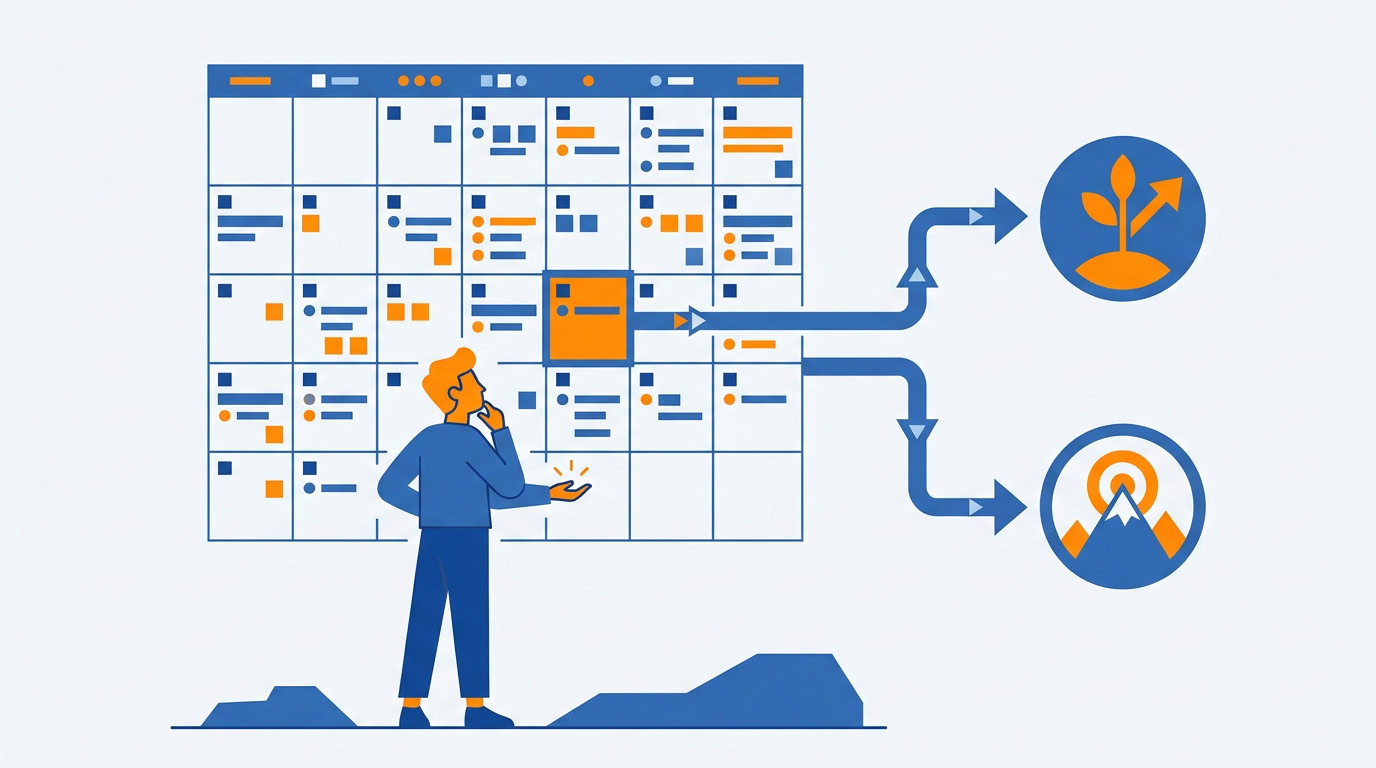
The month has 3 boxes
Anchor events. Outcomes. Key tasks. That’s the whole monthly template.
Anchor events go in first. Anything that takes a full day or longer. Travel, conferences, and vacations. Any personal or work commitment that swallows a day goes on that list too. I want those visible before I choose goals. Then the remaining capacity is easy to see.
Outcomes go in second. Only what fits the days you have left. Up to 3. Each outcome needs a yes-or-no finish line. Research filing taxes is a task. Taxes filed is an outcome. You might still collect receipts, organize records, and get professional help. Work, family, and personal results can sit side by side.
Key tasks go in last. These are the actions that produce the outcomes. Those tasks give your weekly plan a place to start.
I put this session on the calendar about a week before the month begins. Same note every time. Plan the month you have.
Someone asked me about a detailed annual plan. I prefer 90 days. You get room for real progress. The deadline still feels close. A year-long target can lose urgency for months and turn into a scramble near the end. Keep a longer direction if you want one. Annual themes can guide the quarter. Turn 1 aspiration into an outcome for the next 90 days. Name the piece this month will carry.
Review before you repeat the week
If you keep overcommitting every week, the missing habit may be the review. Without it, the next plan reuses the same assumptions.
Before you plan next week, write 3 answers. What did I finish? What held me back? What should change? Look at what you intended. Look at what happened. Let that difference shape the workload.
You can review and plan in 1 session. You can also split them. The review still has to inform the plan.
A useful week names outcomes. At most 3. Same yes-or-no test. Then schedule the tasks that deliver them. The cap hits major priorities. Smaller tasks still belong on the list. For the day I pick up to 3 priority tasks. Other work still happens around them.
Course-correct tomorrow
Daily planning checks the weekly plan. Will today’s actions move it forward?
Do it the night before or the morning of. Pull the next steps for today. Resolve any prerequisite those steps still need.
Practice can sit on the calendar and still be impossible. I use a pickleball example for this. No court booked. No partner confirmed. The time is reserved. The session can’t happen. Find that hole. Fix it. Leave the rest of the schedule alone.
If you get distracted or overwhelmed, add an early-afternoon reminder. Where am I, and what needs to change? That check lets you adjust the rest of the day.
Reassess priorities at least once a day. Do it more often when work is moving fast. Capture the new request. Before you start it, compare it with the outcome you already chose. A genuine deadline, a service commitment, or an emergency can move first. Arrival order is a weak way to choose the next task.
I packed a day into 15-minute increments. A short meeting ran long. The rest of the day had to be reworked. That grid created more administrative work than useful structure. The stress spread forward. I still block time. Open pockets give a normal delay somewhere to land. I don’t have to rebuild the whole day. Leave visible margin between commitments when you plan the next workday.
Back to neutral
Feel like quitting the day before you even plan it?
A bigger routine can be the wrong first step when you’re buried. I compare it to money. Someone struggling to pay the next bill has little room to think about investing. Time works the same way. Process your inbox. Organize your projects. Breathing room makes it easier to look past today’s emergencies.
Neutral can include unfinished work. You need the inbox and your active projects clear enough to look ahead.
Start by planning tomorrow. Add weekly planning once that is consistent. Add the monthly template after that. All 3 horizons work together. The month identifies projects and deadlines. The week turns them into commitments you can keep. The day keeps execution on track. You decide what matters, make room for it, and adjust as life happens.
This is how I teach organizing time inside the 25X productivity system.
Tonight, plan tomorrow. Check your weekly plan. Write the next steps. Fix 1 missing prerequisite. Set an early-afternoon reminder: Where am I, and what needs to change?
Recommended for you
Want the full system? 25X is the flagship productivity system we teach.
Explore 25X →