
How long have you been trying to invent a unique system for a goal you still haven’t hit?
You want to eat healthier. Write more. Stop drowning in a tedious part of your job. So you sit down and design something original. It sounds good in a notebook. Then a tired Tuesday shows up, you have to actually decide in the moment, and the whole thing collapses. You didn’t fail because you lacked discipline. You failed because you never had a playbook.
Here’s the thing. You don’t need a unique system. You need tactics that already work for someone who already has the result you want.
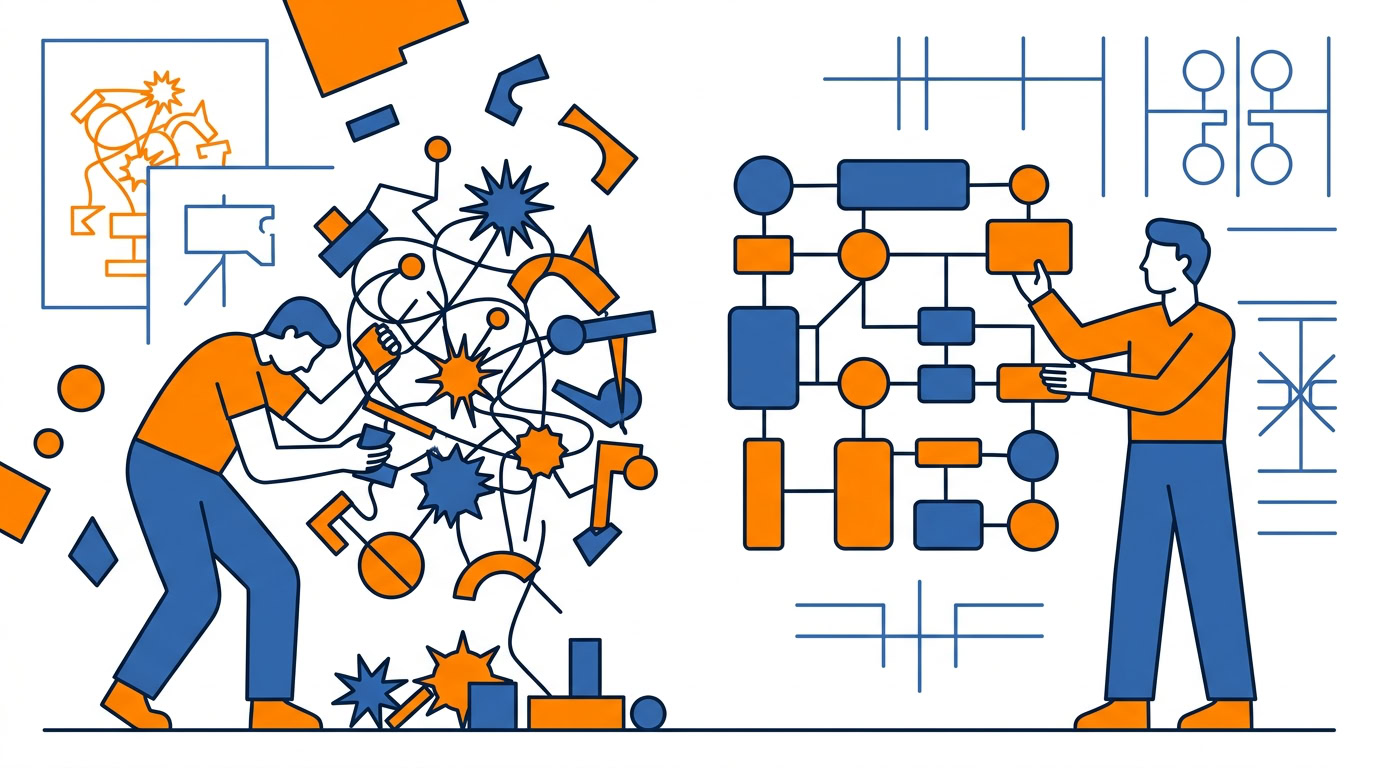
Call it the Copy and Paste Strategy. Instead of inventing from scratch, find a specific person who is already achieving the goal you’re chasing and intentionally imitate what they do. Katie Milkman’s research points at the same idea: borrowing beats inventing. It removes the friction of ambiguity. A vague goal turns into concrete, executable instructions.
So why don’t you do this automatically?
You assume everyone is as stuck as you are
Psychologists have a name for this: the false consensus effect. You assume everyone thinks and acts roughly the same way you do. If you’re messy with a problem, you quietly assume everyone else is messy with it too. You underestimate how much you could learn by breaking that assumption and looking for people who have already solved the specific problem in front of you.
Does this sound familiar? You’ve been struggling with something for months, and it never occurred to you that someone nearby has a default for it. You didn’t go looking, because the assumption was “everyone else is just as bad at this.”
Challenge that. Pick a current struggle. Then ask whether it’s actually true that nobody has figured this out, or whether you just haven’t asked the right person for the right details.
Ask for the playbook, not the pep talk
When you finally sit down with a role model, the default question is almost always the useless one. “How do you stay motivated?”
You’ll get inspiration. You will not get a Tuesday.
Ask for tactical details instead.
What do you do on a normal Tuesday?
That question gets you the real routine. Not the highlight reel. The default day. The sequence they run when nothing special is happening.
What is your default when you are tired?
That one is even better. Tired is when systems actually get tested. A role model’s tired default is worth more than their best-day speech.
Those questions yield high-signal, actionable routines. Motivation is abstract. A Tuesday is a playbook.
Ambiguity is the enemy of habit formation. Knowing you want to “eat healthy” is vague. Knowing exactly what to order at a restaurant on a tired Tuesday is a playbook. Think about a vegetarian who already knows their order before they sit down. They are not summoning willpower in front of a menu. They already have the script. Seeing the “how” in action removes the friction of decision-making.
Write down the specific if-then scripts for your most difficult daily decisions. If it’s 7pm and you’re exhausted, what do you eat? If the afternoon slump hits, what do you work on? If a repetitive task shows up again, what happens next? Get it out of your head and onto paper.
This week, draft three specific playbook questions to ask a mentor or peer. Write them before the conversation so you don’t drift back into “how do you stay motivated?”
Copy a close match, not a fantasy life
Most people copy the wrong person, then blame themselves when it doesn’t stick.
They pick a celebrity with a personal chef and try to run that person’s morning. Then they wonder why it falls apart when they have three kids and a long commute.
When you copy a role model, they need to be a close match. Similar constraints. Family size. Commute. Job type. If the constraints don’t match, you’re doing cosplay. The job is adaptation. Copy the logic, not the lifestyle.
Audit your current role models. Do their constraints actually look like yours? If they don’t, find someone closer. A peer with your kind of job will teach you more than an elite routine you cannot physically run.
Brooks did this with a workflow, not a morning routine. He used to spend hours drafting podcast show notes by hand. He borrowed the logic of a well-ordered machine and pasted it into his process. Now, when he moves a task to a specific column in Jira, Lindy triggers a workflow that generates a full draft in two minutes.
He didn’t paste a guru’s lifestyle. He pasted system logic. One repetitive, tedious task. One automated trigger. The mental friction of starting that draft disappeared with it.
Look at your own work. Identify one repetitive, tedious task and ask: can I automate the trigger for this? You might not need a new habit. You might need a column that starts the work for you.
Run it for seven days. That’s the whole test.
Once you find a tactic worth copying, do not overhaul your entire lifestyle.
That’s where people blow it. They find a good idea and try to become a different person by Monday. High stakes. Perfection required. Resistance goes through the roof.
Run the new tactic as a 7-day experiment instead. Seven days. Temporary on purpose. That lowers the stakes, removes the pressure for perfection, and lets you test whether the pasted habit actually fits your context.
If it fits, keep it. If it doesn’t, you learned something in a week instead of burning a quarter on a routine that was never built for your life.
Pick one small tactic from a role model. One. Commit to using it for exactly seven days.
Identify one goal you’re struggling with. Find one person who has already solved it. Ask them what they do on a normal Tuesday, and what they default to when they’re tired. Paste one tactic into your week. Run it for seven days.
That’s the move. Not a new identity. A copied playbook, tested on purpose.
Recommended for you
Want the full system? 25X is the flagship productivity system we teach.
Explore 25X →