Every December I handwrite Christmas cards.
Not emails. Not texts. Actual cards, with a pen, to people I care about. I’ve been doing it for years. It’s one of those things I look forward to.
Last year I tried something different for one of them. I had a friend I hadn’t connected with in a while — months had passed, wasn’t sure what to say, didn’t want to write something forgettable. So I opened Claude and typed something like: “Here’s a friend. We haven’t talked in months. Here’s what I know about what’s going on in his life. Give me some ideas of things I could write to him.”
It gave me a short list. One of the ideas was good — not perfect, but it pointed me somewhere I hadn’t thought to go. I took that angle, wrote the note completely in my own words, put it in the card, and mailed it.
He texted me a few weeks later. Said it was one of the most thoughtful things he’d gotten all year.
AI didn’t write the card. But it made the card better.
The Fear Underneath the Argument
When I shared this on a podcast, the host mentioned someone who’d said AI was “taking away their zest for life” because of writing. That’s the version of the argument I hear most often: AI is making creative work feel hollow, or replacing the thing that made it meaningful.
I understand where that fear comes from. If writing is yours — if it’s the way you process and connect and express yourself — the idea of a machine doing it instead feels like a loss.
But that’s not what happened with the Christmas card. I wrote it. I chose the words. I decided what to say. The card was mine in every meaningful sense.
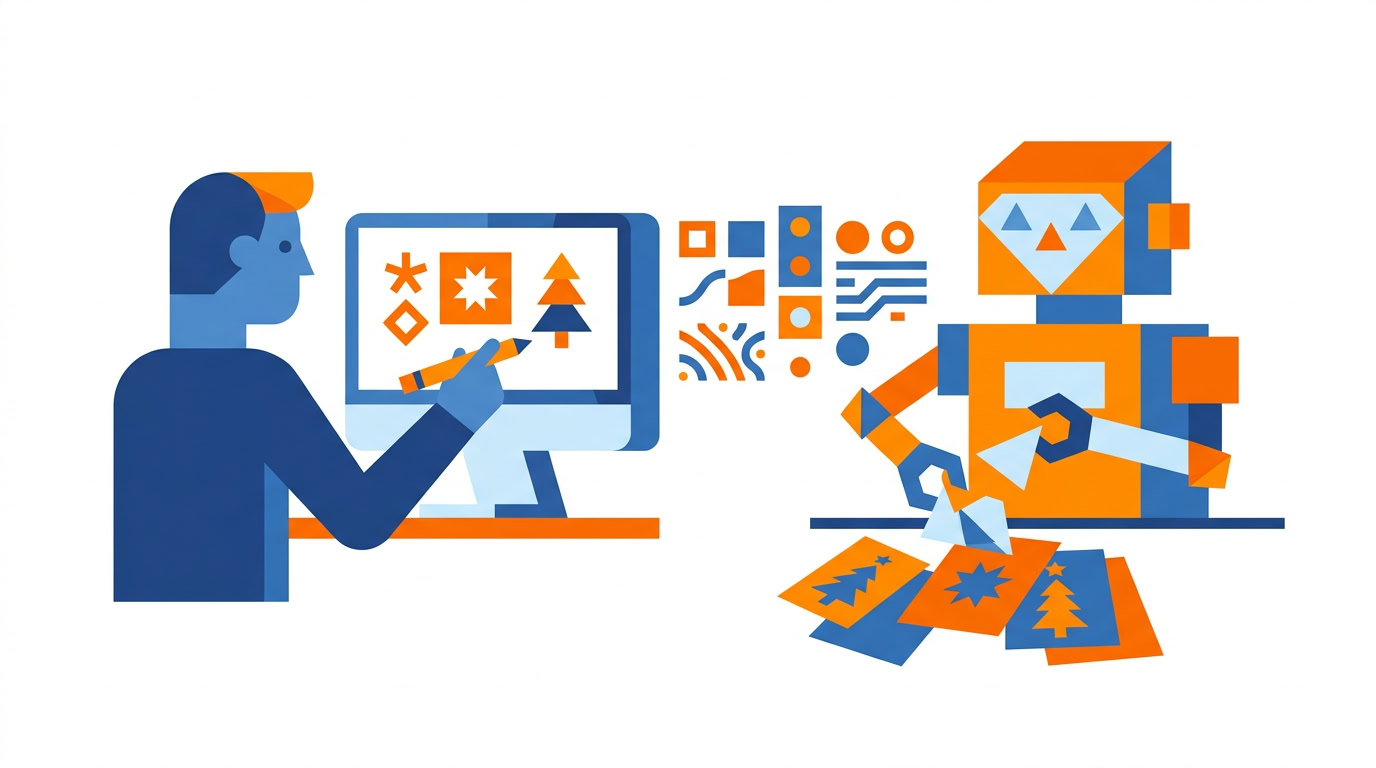
What AI did was act as a thought partner. It surfaced an angle I hadn’t considered and gave me something to react to. That reaction — my version of the idea — is what went into the card.
The Jumpstart Problem
There’s a songwriter and content creator I heard talk about this once. She said she initially resisted AI completely — she’s a writer, she creates her own stuff, she didn’t want a machine anywhere near her creative process.
Then a colleague suggested she try using AI just to get started when she was stuck. Not to write for her — just to give her a paragraph to react to, an idea to push against, something to break the silence of a blank page.
She found it changed her relationship with creative blocks entirely. The AI gave her something to work with, and working with it — agreeing, disagreeing, rewriting, throwing it out — was exactly the creative act she’d been struggling to start.
That’s the version I’m interested in too.
Using AI to Think, Not to Produce
The distinction I keep coming back to is: using AI to produce output versus using AI to sharpen your thinking.
Producing output means handing the task over — describe what you want, get the result, ship it. That’s useful for plenty of things. Research summaries. First drafts of repetitive documents. Reformatting content across platforms.
Sharpening thinking is different. You bring your own knowledge and judgment to the problem, use AI to surface angles you might have missed, and then make your own decision. The AI is more like a smart colleague you can think out loud with.
The Christmas card was the second kind. I knew my friend. I knew our history. I knew what I wanted to express. I just needed help finding the angle.
The people who thrive with AI long-term seem to understand this distinction intuitively. They don’t hand things over wholesale — they use AI the way you’d use a good brainstorm partner. You still have to be in the room. You still have to do the thinking. The AI just makes the thinking better.
When AI Makes You More Human
Here’s what struck me about the card: it worked because I brought context that AI couldn’t have.
I knew this friend. I knew what we’d talked about last time we saw each other. I knew what he cared about and what would land versus what would feel generic. When AI gave me the idea, I could immediately evaluate it through all of that. “Yes, that’s the right angle for him specifically.” That judgment was mine.
The same pattern shows up in how I use AI for other things. I’ll ask it to help me think through a workshop structure — but I know what resonates with my audience from doing this in person. I’ll ask it to suggest angles for a piece of content — but I know which stories are mine to tell. The AI isn’t replacing the knowledge I’ve built. It’s helping me deploy it better.
That’s a very different thing from the fear that AI is taking creativity away.
The Actual Threat
If there’s a real threat in this space, I think it’s not that AI replaces your thinking. It’s that people let it.
If you use AI to produce something you didn’t actually think through — a card that sounds nice but has no real connection to the person, a piece of writing that hits the expected points without any original observation — then yes, something is lost. The result is hollow because you weren’t in it.
But that’s a choice about how to use the tool, not a property of the tool itself.
A pen doesn’t write a thoughtful card by itself either. The pen is just how thought becomes readable.
AI, used well, is the same thing — a medium for sharper thinking, not a replacement for it. The handwriting is still yours.
If you’re exploring how to build AI into your work in a way that actually fits your thinking style, the 4-Day AI Sprint covers practical frameworks for exactly that.
Recommended for you
Want the full system? 25X is the flagship productivity system we teach.
Explore 25X →