Deep work blocks fail more often from a missing plan than from a lack of time. A 5-minute pre-block conversation with Claude turns “I have 3 hours to work on the business” into a specific, timed checklist — and Claude’s pushback on overambitious plans is what makes it work better than ChatGPT for this.
Quick Verdict
- Run a 5-minute planning conversation with Claude before every deep work block — brain dump, prioritize, break into timed steps.
- Claude beats ChatGPT here because it pushes back on unrealistic scope instead of enthusiastically planning the impossible.
- One primary focus per block, with 20% of the time held as buffer — never two ambitious deliverables at once.
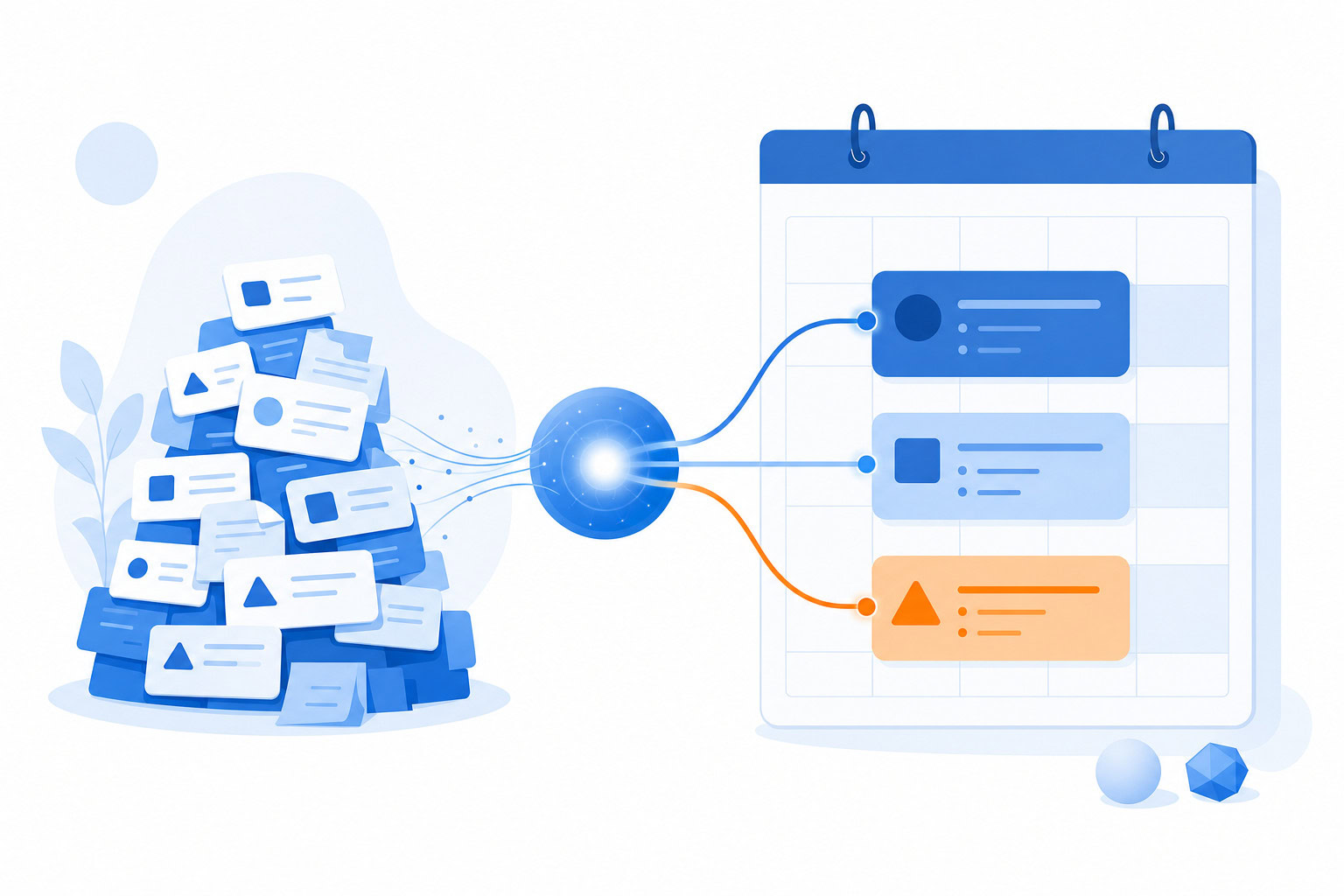
What You’ll Build
| Part of the setup | What to do | Why it matters |
|---|---|---|
| Brain Dump | Tell Claude everything competing for your attention today | Surfaces the real options before you commit to one |
| Prioritization | Claude recommends one primary focus based on deadlines and energy | Removes the decision paralysis of picking where to start |
| Breakdown | Claude turns the focus into timed steps with a clear “done” | You walk into the block with a checklist, not a vague intention |
How I Evaluated This
I judged this against the alternative most people already use — ChatGPT or no plan at all — on the one thing that actually matters for deep work: whether it forces realistic scope instead of letting you overcommit.
Why Deep Work Needs a Plan
Here’s what happens without a plan: you sit down for a 3-hour focus block, open your laptop, check email “just for a minute,” start working on something, realize you need information from someone, switch to a different task, and suddenly it’s lunchtime and you didn’t finish anything.
I need 3-4 hour uninterrupted blocks for my best work. Morning hours only, before 11am. 1-2 hour fragments are ineffective and draining for me. But even with the time protected, the quality of the block depends on walking in with a clear plan.
Claude turns “I have 3 hours to work on the business” into “Here are the exact three things I’ll produce, in this order, with these specific outcomes.”
The 5-Minute Pre-Block Planning Session
Every morning before my first deep work block, I open Claude and run this conversation. It takes about 5 minutes.
Prompt 1: The Brain Dump
“Here’s what’s on my mind for today. I have a {3-hour} deep work block starting at {8am}. Here’s everything competing for that time: {list everything… projects, tasks, ideas, deadlines, things that are stressing you out}. Help me pick the highest-leverage use of this block.”
I literally dump everything. The client proposal that’s due Friday. The workshop content I need to create. The system I want to build. The email I’ve been avoiding. All of it.
Prompt 2: The Prioritization
Claude comes back with a recommended focus. Usually one primary deliverable and maybe one secondary task. It considers deadlines, dependencies, and energy requirements.
If I disagree, I push back. “The proposal is due Friday but I don’t have the information I need yet. What should I do instead?” Claude adjusts. This back-and-forth usually takes 2-3 exchanges.
Prompt 3: The Breakdown
Once we’ve picked the focus, I ask:
“Break this into specific steps I can complete in my {3-hour} block. For each step, tell me: what I’m producing, roughly how long it should take, and what ‘done’ looks like. Be specific.”
Claude returns something like:
- Step 1 (45 min): Draft the workshop outline. Done = 8-10 topics with descriptions, ordered by flow.
- Step 2 (60 min): Write the first three sections in detail. Done = 1,500 words of actual content, not notes.
- Step 3 (45 min): Create the participant worksheet. Done = PDF-ready document with exercises for each section.
- Buffer (30 min): Review everything. Fix gaps. Send to Mary Keith for feedback.
Now I walk into my deep work block with a checklist. No deciding. No wandering. Just execution.
Advanced: The Weekly Deep Work Map
On Sunday during my weekly review, I do a bigger version of this with Claude.
“Here are my priorities for this week: {list them}. I have deep work blocks on {days/times}. Map each priority to a specific block. Consider: which tasks need morning energy, which are dependent on other tasks completing first, and which days have meetings that will drain my focus. Flag any priorities that won’t fit.”
Claude creates my entire deep work plan for the week. Monday’s block is for the client proposal. Tuesday’s block is for workshop content. Wednesday’s block is for agent building. Each one has specific outcomes defined.
The flag feature is crucial. Claude often tells me: “You have five priorities but only three deep work blocks. Something has to move to next week or be delegated.” That reality check saves me from my tendency to overcommit. I used to plan eight hours of productive work in a day full of padel and social events. Now Claude catches that fantasy before Monday arrives.
What Claude Does Better Than Other AI for This
I’ve tried this workflow with ChatGPT. It works, but Claude is better for three reasons:
1. Claude pushes back on your plan. If I say “I’ll write the entire course in one 3-hour block,” Claude will say “that’s 8 hours of work compressed into 3. Here’s a realistic scope instead.” ChatGPT will enthusiastically plan the impossible and leave me feeling behind by 10am.
2. Claude is better at breaking down ambiguous work. “Work on the business” is vague. Claude asks clarifying questions: “What specifically about the business? Revenue? Operations? Content? Client delivery?” It forces specificity before planning.
3. Claude handles context better. With Claude Projects, I have a persistent workspace with my current priorities, calendar constraints, and project details. Each planning session builds on previous ones. Claude remembers that I said I’d finish the proposal by Friday and checks on progress.
Real Prompts You Can Use
Morning planning (daily):
“I have {X hours} for deep work today starting at {time}. My top priorities are {list}. I have {meetings/commitments} that will affect my energy. What’s the highest-leverage use of this block? Break it into timed steps with clear deliverables.”
Weekly mapping (Sunday):
“Here are my priorities for this week: {list with deadlines}. My deep work blocks are: {days and times}. Map priorities to blocks. Flag anything that won’t fit. Consider energy requirements… put the hardest thinking in morning blocks.”
Getting unstuck mid-block:
“I’m 45 minutes into my deep work block and I’m stuck on {specific thing}. I’ve tried {what you tried}. I have 90 minutes left. Should I push through, switch to a different approach, or move to my secondary task?”
End-of-block review:
“I just finished my deep work block. Here’s what I completed: {list}. Here’s what I didn’t finish: {list}. For tomorrow’s block, should I continue where I left off or start fresh on something else?”
Energy-based planning:
“It’s 2pm and my energy is lower than expected. I was planning to {original plan} but I’m not sure I have the focus for it. What’s a productive alternative that matches low-energy but still moves something forward?”
The Rules That Make It Work
Never skip the planning session. Five minutes of planning saves 30-60 minutes of wandering during the block. The ROI is absurd. Even on days when I’m running late, I do a 2-minute version.
Define “done” before you start. “Work on the proposal” is not a plan. “Write the problem statement and recommended approach sections, totaling 800 words” is a plan. Claude is great at forcing this specificity.
One primary focus per block. Not two. Not three. One thing that gets your best attention. If there’s time left, have a secondary task ready. But the block succeeds or fails based on the primary deliverable.
Match tasks to energy. Creative work (writing, designing, strategizing) goes in morning blocks when energy is highest. Analytical work (reviewing, editing, organizing) can go in afternoon blocks. Never put your hardest thinking in your lowest energy window.
Use buffer time. I plan for 80% of the block and leave 20% as buffer. Tasks always take longer than estimated. A 3-hour block gets 2.5 hours of planned work and 30 minutes of flex. This prevents the cascading failure where one task running long ruins everything after it.
Common Mistakes
Planning during the block. If you sit down at 8am and spend until 8:30 figuring out what to do, you’ve already lost. Plan before the block starts, even if it’s the night before.
Overloading the block. Two ambitious deliverables in one block means neither gets done well. Better to finish one thing completely than make 50% progress on two things.
Ignoring energy cycles. Some people do their best work at 6am. Others at 10pm. AI can’t tell you your energy pattern… you have to observe it. But once you know it, Claude can plan around it.
Not protecting the block from interruptions. Planning is useless if you answer Slack messages during your deep work. Close everything except the tools you need for the planned task. This isn’t a Claude problem… it’s a discipline problem. But Claude can help by making the plan so clear that the cost of interruption is obvious.
What You’ll Need
- Claude (free or Pro at $20/month). The free tier works for daily planning. Pro gives you Projects for persistent context.
- A calendar with deep work blocks already protected. See my time blocking guide for setup.
- 5 minutes before each block. That’s the entire time investment.
FAQ
Can I use ChatGPT instead of Claude for this?
Yes, but you’ll get less pushback and less specificity. Claude is better at saying “that’s too much for one block” and forcing you to scope down. If you use ChatGPT, add explicit instructions like “be realistic about what I can accomplish” and “push back if my plan is too ambitious.”
Does this work for creative work or just structured tasks?
Both. For creative work, the plan might be: “Spend 45 minutes brainstorming ideas for the workshop opening. Then spend 60 minutes writing the first draft of the opening story. Then spend 30 minutes refining.” The steps are different but the planning structure is the same.
How do I know if my deep work blocks are productive?
Track what you planned vs. what you completed. After two weeks, you’ll see patterns. If you consistently finish early, plan more ambitiously. If you consistently run over, plan less. Claude can help analyze this pattern if you share your completed vs. planned tasks.
How is this different from just using a to-do list?
A to-do list tells you what to do. This forces you to pick one primary focus, break it into timed steps with a clear definition of “done,” and get pushback if you’re overcommitting — the kind of pre-block scoping a static list can’t do on its own.
Next Step
Recommended for you
Want the full system? 25X is the flagship productivity system we teach.
Explore 25X →