I was away for a few days. Before I left, I deployed a multi-agent system on a complex dashboard spec. One agent ran as the orchestrator. Claude Code, Codex, and a local LLM did the rest. They debated, coded, tested, and reviewed each other around the clock. Nobody was watching.
I came back to a working product. No human intervention while I was gone.
I used to think I had to sit on work like that. Too many steps. Code that has to run. A spec you can’t wave through in one sitting. Now I know the pattern: a clear spec, a review loop, and room for the agents to keep going. The bottleneck on that project was my review, not their coding.
That’s the ceiling right now. You shouldn’t start there. Most people still treat AI like a chatbot they open when they remember.
So sit with a different question first.
If the labs went dark tomorrow, would you feel it?
If OpenAI and Anthropic went down today, how much would you be affected?
If you’d shrug and go about your day, you have zero leverage. You’re chatting. That’s a habit.
If your day would break, you’ve put AI into the actual work. I used to treat dependency like something to be careful about. I measure it now. How much disruption you’d feel tells you whether this is in your workflow or sitting on the side of your desk.
Audit last week. If you only asked questions in a chat box, you’re not leveraging yet.
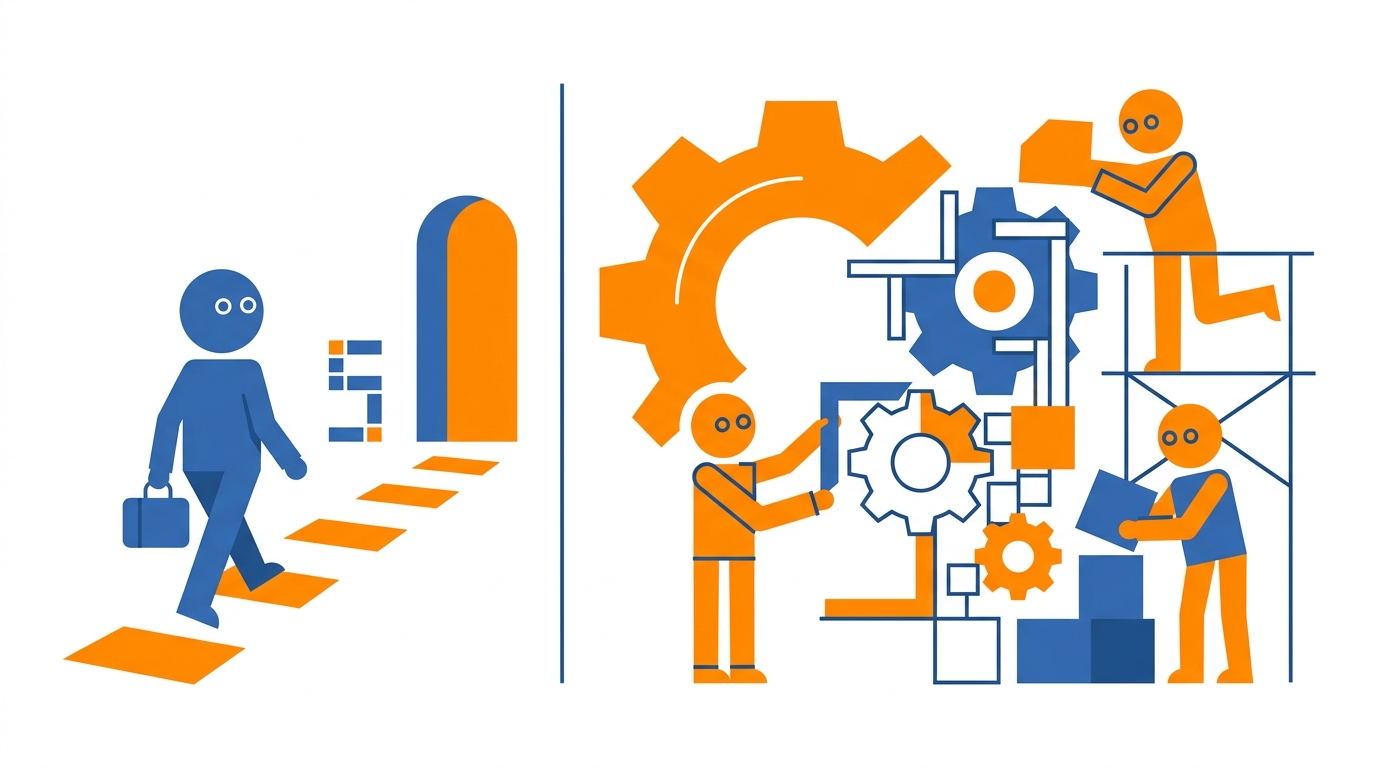
Chatbots wait. Agents need a machine that’s on.
To get from chatbot to agent, you need a computer that stays on.
A Mac Mini, or a similar low-power device, running 24/7. Agents can check urgent email while you sleep. They can finish research. They keep a heartbeat of work going overnight.
Set up a dedicated AI box. One machine whose job is to run agents whether you’re at the keyboard or not. Without that, every task waits for you to open the laptop. What happens to those tasks when the lid is closed? They don’t happen.
Build the briefing before you build the dashboard
That run is the advanced move. The thing to build first is a Morning Briefing agent.
Every morning, an agent scans your calendar, email, texts, and the weather. It writes a personalized briefing. Key meetings. Context from past interactions with the people you’re about to see. Prep items, down to the boring ones like “drink water.”
That kind of prep is what an executive assistant would spend 10-20 hours on. The agent does it before you start the day. It also takes the worst part of mornings off your plate: context switching, trying to remember who you’re talking to and why it matters.
This sits inside a bigger setup, a Digital Chief of Staff. Admin work, handled by a small suite of agents.
Email Manager
It pre-drafts replies in your voice and checks calendar availability. You still send the personal ones.
Meeting Prep Agent
Daily briefs, plus a context summary about 30 minutes before a meeting. If you build one agent this month, build this one.
Post-Meeting Processor
Transcripts become CRM updates and task items. You don’t reconstruct the call from memory.
Don’t stand up the whole suite in a weekend. Start with the Meeting Prep Agent. Get one briefing you actually read.
And you don’t need to write markdown or code to do any of this. The tax used to be technical instructions. That’s gone. Tools like Lindy, OpenClaw, and Claude Cowork let you describe what you want in plain language. Hillbilly language is fine. The AI writes the skills and the prompts.
The barrier is clear thinking. Describe the job so a stranger could do it. Then let the tool write the instructions. Stop trying to learn to code. Start describing the problem.
Give it a leash that matches the risk
The fear is always the same. What if it sends the wrong thing?
Don’t give every task the same oversight. Use a sliding scale. I call it the Trust Gradient.
High risk: reputation and anything external. You review and you send. Personal email lives here. The agent drafts. You own the send button.
Medium risk: internal process. The AI drafts and executes. You review the final output. Internal reports sit here.
Low risk: transactional. Fully autonomous. Purchase confirmations. Marking internal tasks done. Let it run.
Map your recurring work onto that gradient this week. You’ll find tasks you’ve been hovering over that belong in the low-risk bucket.
There’s a second shift, and it’s in your head. AI produces work faster than you can review it. You will never look at everything. If you’ve chased inbox zero in GTD, you already know this feeling. The pile grows whether you stare at it or not.
You don’t get to delete yourself as the bottleneck. You manage the flow. Trust gets earned through small, consistent wins. Then you drop the review step on the low-risk work, a little at a time.
Do this next
Get a Morning Briefing running on an always-on box. Write the spec in plain language. Turn the machine on. Leave. Read what showed up when you weren’t in the chat.
Recommended for you
Want the full system? 25X is the flagship productivity system we teach.
Explore 25X →