I spent a year using only ChatGPT Plus at $20 a month. That was fine for a while. But then I hit limits. I needed better coding, so I upgraded to Claude. I needed better images and video, so I added Gemini. I needed real-time research, so I added Grok. Each upgrade came because I ran into a wall with what I was trying to build. Now I’m spending about $1,000 a month across all platforms. People see that number and think it’s crazy. But here’s the thing: I produce the output of five people. So the ROI is there.
The lesson isn’t to spend money recklessly. It’s to understand that as you level up, your tool stack evolves with your ambitions.
This is the exact same logic that applies when you are trying to decide between Perplexity Pro and ChatGPT Plus today. Both cost $20 a month. Both are powerful. But they solve completely different problems. If you pick the wrong one for your primary bottleneck, you will feel like you are paying for a tool that doesn’t quite work.
The $20 Dilemma: Why You Can’t Just Pick One
Most comparison articles treat these two as direct substitutes. They ask which AI is smarter or which has the better interface. That misses the point entirely.
The real question is about your workflow. Are you trying to discover new information and verify facts? Or are you trying to synthesize information into a creative output?
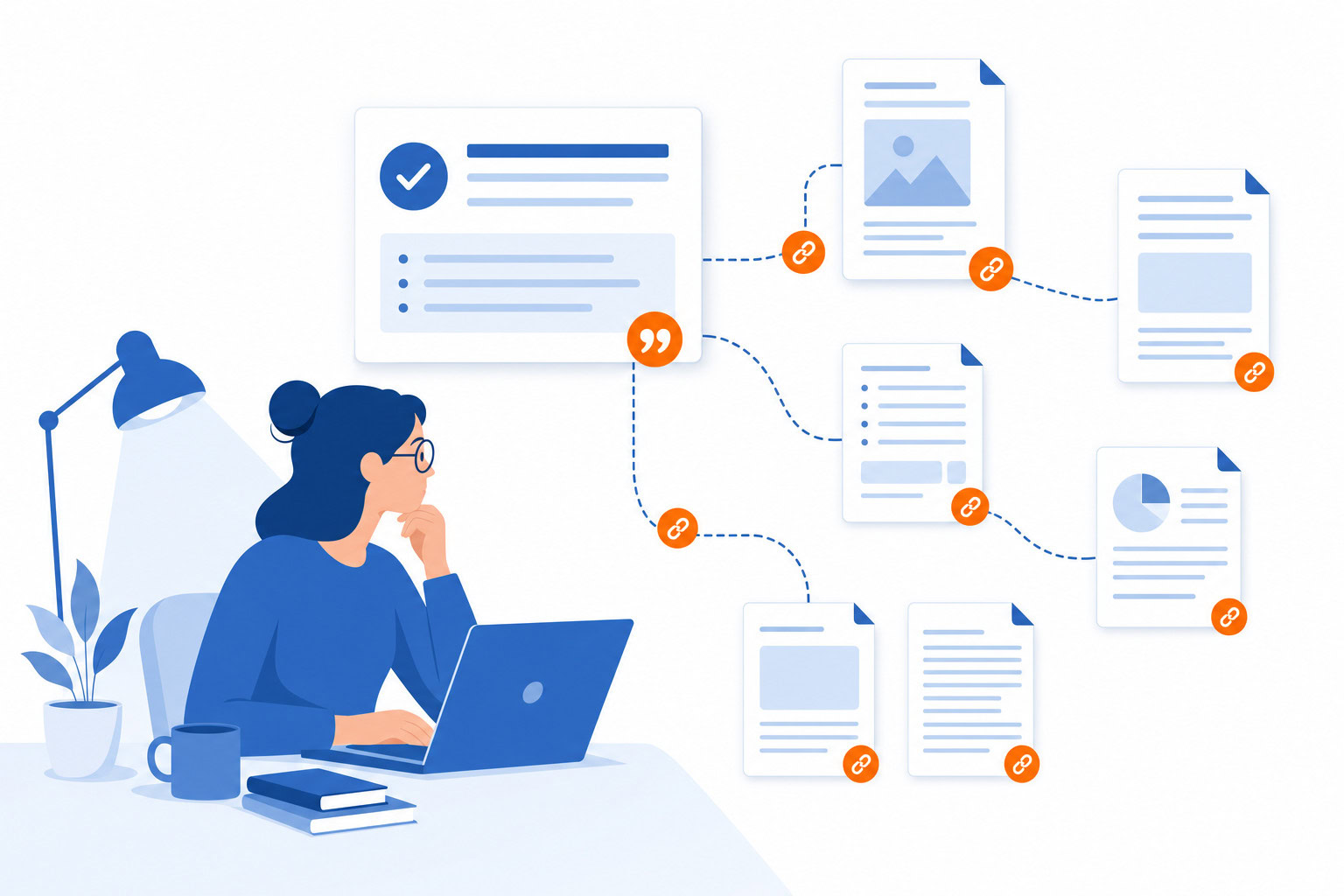
Perplexity is an answer engine. It is built to search, cite, and verify. It gives you a report with sources you can click. ChatGPT is a creative partner. It is built to write, brainstorm, and reason. It gives you a draft you can refine.
You need to know which one matches your current goal. If you are doing market research or fact-checking a story, Perplexity is the only logical choice. If you are writing a blog post or planning a strategy, ChatGPT is the stronger tool.
The Core Difference: Answer Engine vs Creative Partner
Let’s get specific about what each tool actually does in a 2026 workflow.
Perplexity Pro functions like a super-charged research assistant. When you ask it a question, it searches the live web. It reads multiple sources. It then synthesizes an answer and provides clickable citations for every claim it makes. You can use its Deep Research mode to dig into complex topics, and it will generate a full report with a bibliography. It is designed for accuracy and traceability.
ChatGPT Plus functions like a versatile intern. It has access to the web, but its primary strength is in long-form generation, coding, and conversation. You can talk to it via voice mode while you cook dinner. You can ask it to write a 500-word article in seconds. You can use it to calculate complex formulas or draft legal agreements. It is designed for flow and creativity.
I have tested ChatGPT for things like generating short bios for podcast prep. I just type the name and company, and it gives me a solid starting point. It is fast. It is convenient. But if I need to know exactly where a statistic came from, ChatGPT will sometimes give me a general summary without a clear source. That is where Perplexity shines.
Real-World Test: Researching Trending Topics
I put both tools to the test by asking them to analyze a trending topic from the last seven days. This is a common task for anyone doing market sensing or content planning.
Perplexity found the latest news articles, social media threads, and data points within seconds. It organized them by source and gave me a clear breakdown of what was happening right now. I could click a link to see the original article. The citations were real. The data was current.
ChatGPT gave me a good summary of the trend. It was well-written and easy to read. But when I asked for the specific source of a key statistic, it hedged. It said something like “based on recent reports” without giving me a direct link. For a casual overview, that is fine. For serious research, it is a problem.
This is the critical difference. Perplexity is built for the “what is happening now” phase. ChatGPT is built for the “what do we do about it” phase.
The ‘Multi-AI Verification’ Workflow
Here is how I actually use them together. I call this the multi-AI verification workflow.
I start with Perplexity to get the facts. I ask it to research a topic and give me the latest data with citations. Once I have the raw information and the sources, I copy that context into ChatGPT. I then ask ChatGPT to use that verified information to write a newsletter draft or a strategy memo.
This approach catches the blind spots of both tools. Perplexity ensures the data is real and sourced. ChatGPT ensures the output is engaging and well-structured.
I’ve seen this work for high-stakes research and competitor analysis. If you rely on a single source, you risk getting a hallucinated fact or a biased summary. By cross-verifying, you get the best of both worlds.
Feature Deep Dive: Citations, Deep Research, and Model Switching
Citations and Sources
This is the biggest differentiator. Perplexity Pro puts citations right next to every sentence in its answer. You can click them to go to the source. This is essential for anyone who needs to be able to say “I checked the source” if someone challenges the data. ChatGPT has search capabilities now, but it does not consistently link back to specific sentences in the same way.
Deep Research
Perplexity introduced a Deep Research mode that is a game changer for complex queries. You can ask it to research a topic for several minutes. It will browse dozens of pages, read full articles, and synthesize a comprehensive report. It feels like hiring a junior analyst for an hour. ChatGPT can do long analyses, but it doesn’t have this dedicated deep-dive mode that is optimized for source gathering.
Model Switching
Both tools allow you to switch between different AI models. Perplexity lets you choose between its own models and third-party engines. ChatGPT gives you access to GPT-5.4 and GPT-4o. The difference is in the intent. Perplexity’s model switching is about picking the best engine for a search task. ChatGPT’s is about picking the best engine for a creative or coding task.
Who Should Keep Perplexity Pro? (The Researcher)
You should keep Perplexity Pro if your primary goal is to find, verify, and analyze information.
This tool is perfect for:
- Journalists who need to fact-check quickly
- Students who need to write papers with real citations
- Marketers who need to track trending topics and competitor moves
- Investors who need to digest financial reports and news fast
- Anyone who needs to know where a piece of information came from
If your work depends on accuracy and traceability, Perplexity is the tool you need. It saves you hours of tab switching and source hunting.
Who Should Keep ChatGPT Plus? (The Creator)
You should keep ChatGPT Plus if your primary goal is to create, write, or build things.
This tool is perfect for:
- Content creators who need to draft blog posts, scripts, or emails
- Writers who need help brainstorming headlines or stories
- Developers who need help with coding and debugging
- People who want to use voice mode for hands-free tasks
- Anyone who needs a conversational partner to bounce ideas off
I use ChatGPT for my weekly review. I have it run through a checklist for me using its audio feature. It feels like a conversation, and I don’t have to push buttons. I just answer the questions it asks one at a time. That kind of flow is hard to get with a research tool.
Pricing Comparison
Both tools sit at the $20/month price point for their pro tiers. This makes the decision about value per task, not cost.
Perplexity Pro
- Standard Pro: $20/month
- Education Pro: $10/month (requires verification)
- Enterprise: $40/user/month
- Features: Deep Research, model switching, advanced citations, file uploads
ChatGPT Plus
- Standard Plus: $20/month
- Features: GPT-5.4 access, voice mode, image generation (DALL-E 3), video experiments (Sora), custom GPTs, advanced coding
There is no clear price winner. You are paying for the same amount of money for two different types of utility.
Side-by-Side Comparison Table
| Feature | Perplexity Pro | ChatGPT Plus |
|---|---|---|
| Primary Strength | Research, fact-checking, sourcing | Creative writing, coding, conversation |
| Citations | Yes, inline and clickable | Limited, often generalized |
| Deep Research | Yes, dedicated mode | No, relies on standard search |
| Voice Mode | Basic | Advanced, conversational |
| Image Generation | Flux, DALL-E 3 | DALL-E 3 |
| Video Generation | No | Yes (Sora experiments) |
| Best For | Analysts, researchers, students | Writers, creators, developers |
| Price | $20/mo (Pro), $10/mo (Student) | $20/mo |
The Verdict: Your Decision Matrix Based on AI Fluency Level
The choice comes down to your AI Fluency Level and your current bottleneck.
If you are at the AI Workflows level, where you are building systems that require accurate, real-time data, you need Perplexity. It is the essential tool for the discovery phase.
If you are at the AI Assisted level, where you are using AI to help you write, plan, and create, you need ChatGPT. It is the essential tool for the creation phase.
Most power users will eventually end up using both. But if you can only afford one right now, pick the one that solves your biggest pain point today.
If your pain is “I don’t have time to find the right sources,” get Perplexity.
If your pain is “I have the sources but I can’t write the story,” get ChatGPT.
FAQ
Can I use both Perplexity and ChatGPT for free?
Both have free tiers. Perplexity’s free version is quite capable for basic search. ChatGPT’s free version is limited to older models and has usage caps. The Pro versions unlock the full potential of each tool.
Is Perplexity better for writing?
No. While Perplexity can write summaries, ChatGPT is significantly better for creative writing, long-form content, and nuanced drafting. Perplexity’s output can feel more robotic.
Does ChatGPT have a good citation feature?
It has improved, but it still does not match Perplexity’s inline citation system. ChatGPT will sometimes summarize sources without linking to the specific sentence or page.
Which one is better for coding?
ChatGPT Plus is the clear winner for coding. It has better context awareness, custom GPTs for specific languages, and a more sophisticated understanding of logic and architecture.
Next Steps
If you are ready to test the difference, start with the tool that matches your immediate need.
Start your 7-day free trial of Perplexity Pro
If you want to see how to integrate these tools into a full workflow, check out our full Perplexity Pro review to see how it fits into a multi-AI strategy.
Recommended for you
Want the full system? 25X is the flagship productivity system we teach.
Explore 25X →