

Creating the
Ultimate Morning Routine
Your morning sets the tone for the rest of your day, right?
Let’s imagine two different mornings. The first morning is chaotic and rushed, leaving you feel like your head is spinning.
The second morning is peaceful and ordered, putting you in a great frame of mind for the rest of your day.
Now, what’s the difference between these two days?
A morning routine. Yep, that’s it. Having a morning routine can completely transform both the day and your life. Morning routines really are the superpower of successful people.
In this guide, we’re going to walk through why, what, and how of creating a morning routine that is incredibly powerful.
The Benefits Of Well-Defined Morning Routines
What’s the big deal with morning routines? Are they really all that beneficial? Why not just get up and let your morning unfold organically?
Here’s why…
You Get More Done
A morning routine helps you get more things done every day. Why? Because instead of just lazing around after you wake up, you go through a set of specific actions that prime you to start working. What’s more, you also start work at the same time every day, which is really helpful if you work remotely.
Having a predetermined routine and set starting time for work gives you momentum from the moment you wake up. By the time you start work, you’re ready to tackle the rest of the day.

In his book Daily Rituals: How Artists Work, Mason Currey writes about the habits, routines, and rituals of hundreds of artists, including Benjamin Franklin, Karl Marx, and Ernest Hemingway.
Talking about the benefits of a structured routine, he says:
In the right hands, it [a routine] can be a finely calibrated mechanism for taking advantage of a range of limited resources: time (the most limited resource of all) as well as willpower, self-discipline, optimism. A solid routine fosters a well-worn groove for one’s mental energies and helps stave off the tyranny of moods.
You Feel Less Stress
This may seem counter-intuitive, but having a structured routine each morning reduces the amount of stress in your life. The reason why? You know exactly what you’re going to do every morning. You don’t have to think about it, you just do it.
This regularity gives you a sense of control and calm. Rather than feeling like the day is attacking you, you attack the day. Instead of rolling out of bed and then rushing to grab breakfast, shower, and start the day, you start the day feeling in control of how things are going.
You Have More Mental Energy
You have a limited amount of mental energy to work with each day. Every decision you make takes some of that mental energy. As the decisions begin to mount, you begin to experience decision fatigue, leaving you vulnerable to making poor choices.
When you have a morning routine, you reduce the number of decisions you have to make every day, and you can use the mental energy you saved for other, more important things.
This is why Barack Obama chose to only wear gray and blue suits while he was the President. As he said to Vanity Fair:
You’ll see I wear only gray or blue suits. I’m trying to pare down decisions. I don’t want to make decisions about what I’m eating or wearing. Because I have too many other decisions to make.
How To Create The Perfect Morning Routine
Now that you know why morning routines are so beneficial, let’s talk about how to create your own morning routine.
Now, to be clear, there are no hard and fast rules regarding how you should start your morning. You need to do what fits your life and circumstances best. However, there are some general best practices that can set you up for success.

Keep It Simple
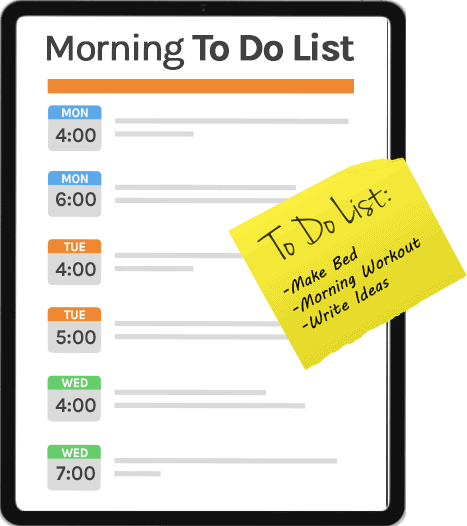
If your morning routine has too many parts, it will take too long. If it takes too long, you won’t want to do it, which defeats the entire purpose. Your routine shouldn’t be so long that you have to wake up at 4:30 AM to get it done (unless you want to). It needs to be doable.
As you think through what you want to include, start small. You can always add more things in later once you’ve established the initial habits.

Stick With It Every Morning
Any time you’re starting something new, there’s resistance, and it’s no different with implementing a morning routine. There will be times when you don’t want to do your routine. When you want just a little extra sleep. When you don’t feel motivated.
Stick with it. On average, it takes between 30 - 60 days for something to become a habit. Once your morning routine becomes a habit, it will be so much easier for you to do. In fact, it will be harder for you not to do your routine because it has become such an integral part of your day.

Know Your “Why”
Ultimately, if you want to stick with your morning routine, you need to have compelling reasons behind the things you do. If something is part of your morning routine just because you feel like it should be, you’re going to have a hard time being motivated to do it.
For example, say you want to exercise for 30 minutes as part of your morning routine. Why do you want to exercise? If you don’t have a clear and compelling reason in your mind, it’s going to be tough to keep it up.
As you build your morning routine, find a compelling purpose behind each activity you decide to include.
What To Include In Your Morning Routine
Now let’s talk specifically about what to include in your morning routine. Remember, there are no hard and fast rules. Only include things that are beneficial to you. And don’t be afraid to experiment a bit. You may try some things and realize they’re just not a good fit for you. That’s okay.
So what are some activities you may want to include in your routine?
Rise Early
Most successful people get up early so that they can get started on the day while others are still sleeping. While there are a few exceptions, like Winston Churchill, many of the most successful people in the world get their days started early:
You get the point. The simple truth is that waking up early makes it easier to implement a morning routine. Rather than rushing to fit in all the activities in your routine before starting your workday, you can move at a steady, calm pace.
If you’re intimidated at the thought of waking up early, don’t be. You can do it! It may take your body a bit of time to get used to your new schedule, but before long you’ll find yourself eager to get started early.
If you need help, check out our guide: 8 Strategies For Waking Up Early And Becoming A Morning Person.
Cold Exposure
This may sound a bit crazy, but there is quite a bit of evidence that cold exposure can actually be very good for you. The benefits include everything from reduced inflammation to a stronger immune system to less pain.
Now, this doesn’t mean you need to start every day with an ice bath. You can start with something as simple as splashing cold water on your face when you first wake up. Legendary comic Jerry Seinfeld told Alec Baldwin that begins his day by splashing water on his face, followed by listening to sports radio and eating a bowl of oatmeal.
If it’s cold outside, going for a short walk while wearing fewer layers of clothes is another simple way to expose yourself to cold temperatures in the morning.
In his book Tools of Titans, Tim Ferriss talks about how he, chess champion Josh Waitzkin, Tony Robbins, Naval Ravikant, and more do 30 - 60 second cold showers every day. No, it won’t feel particularly pleasant, but it’s a simple way to simultaneously get cold exposure and wake yourself up really quickly.
If you absolutely hate the cold, this may not be the best thing to add to your morning routine. But if you can handle it, it can be really beneficial.
Note: if you’re going to do any significant cold exposure, such as ice baths, talk to your doctor first. Rapid exposure to extremely cold water can trigger something called cold shock response, which is very dangerous.
Hydrate
To state the obvious, water is absolutely essential for life. Even mild dehydration can reduce alertness, memory, concentration, and physical performance. Drinking water first thing in the morning ensures that you stay hydrated and operate at peak performance.
It’s even more important to drink water if you drink coffee in the morning since coffee is a diuretic, meaning it flushes fluids from your body. One simple solution is to drink water along with your morning coffee so that you stay “topped up”.
If plain water is too bland for you, throw a slice of lemon, lime, or orange in to mix it up. While there’s not much evidence that lemon water detoxes your body (despite popular claims), it does have a number of other health benefits, such as boosting vitamin C levels and helping prevent kidney stones.
Exercise
In addition to the numerous health benefits, which you already know, exercise in the morning primes you to succeed the rest of the day. It raises your energy levels, clears the mind, and opens blood vessels.
Even just a seven minute high-intensity workout is scientifically proven to have many of the same health benefits as much longer endurance workouts.
If you don’t want to fully workout in the morning, consider doing just a few exercises, like pushups, to activate your muscles and get your blood pumping.
Additionally, consider doing a few minutes of stretching. If you spend most of your day in front of a computer, your muscles are going to tighten up, particularly in your back and arms. Over time, you lose flexibility and range of motion. By stretching first thing in the morning, you combat tightness and improve overall flexibility levels.
If you’re not sure what stretches to do, here are five simple ones to get you started.
Meditate
There are many scientifically proven benefits of meditation, including:
You don’t have to meditate for hours and hours to reap the benefits. Even just a few minutes every day can transform your life in ways you couldn’t even imagine.
And the good news is that you don’t need to be a guru or anything like that in order to meditate. There are tons of meditation apps that provide guided meditations for just about every situation in life. Some of the top ones include:
Make Your Bed
Navy Seal William H. McCraven, who commanded the forces that ultimately killed terrorist leader Osama Bin Laden, said this at a commencement speech at the University of Texas:
If you want to change the world, start off by making your bed. If you make your bed every morning, you will have accomplished the first task of the day. It will give you a small sense of pride, and it will encourage you to do another task, and another, and another. And by the end of the day that one task completed will have turned into many tasks completed.
He’s not wrong. Even though it’s extremely simple, making your bed is what’s called a “keystone habit”. When you make your bed in the morning, it establishes a pattern of making good choices. The simple act of making your bed first thing in the morning translates in making better decisions throughout the rest of the day.
As Charles Duhigg notes in his book The Power of Habit:
Making your bed every morning is correlated with better productivity, a greater sense of well-being, and stronger skills at sticking with a budget. It’s not that...a tidy bed causes better grades or less frivolous spending. But somehow those initial shifts start chain reactions that help other good habits take hold.
When you wake up in the morning, take the three minutes it takes to make your bed. Your entire day will be better as a result.
Morning Pages
Morning pages is a concept originally devised by Julia Cameron to help artists get past creative blocks. But as many people have discovered, it’s incredibly helpful for just about everyone. Tim Ferriss calls it the “most cost effective therapy I’ve ever found.”
The concept is simple. Fill three pages with longhand, stream of consciousness writing, first thing in the morning (ideally). Do you have to do three full pages? No, of course not. That’s just a guideline. It provides you with enough space to dump what’s rattling around in your brain without taking an excessive amount of time.
The benefits of morning pages?
There are two keys to morning pages. The first is the stream of consciousness writing. The goal is not to publish your thoughts or show them to anyone else. The goal is to get out of your head. So don’t self edit as you write.
The second is to write longhand, not on a computer or app. This forces you to slow down and take stock of what’s really going on inside your brain.
Review Goals
Reviewing your goals every morning helps you stay on track with them. By constantly reviewing the things that are most important to you, it keeps you focused on them and helps you make consistent forward progress. As the saying goes, what you focus on will grow. Regularly focusing on your big goals will ultimately help them grow into fruition.
When you review your goals, it can be helpful to visualize what success looks like. What will it feel like when you finally achieve the goal? What benefits will you experience? How will it improve your life? Visualizing the results can help bring the future into the present.
Work On Your Most Important Task
Ideally, your morning routine will also include working on your Most Important Task (MIT). Now, if you can’t do this until you drive to your office, this may not be possible. But if you can, working on your MIT is the perfect way to transition out of your morning routine and into the rest of your day.
Your MIT is the one thing that will create the most results for you. Maybe it’s writing a chapter in a book. Maybe it’s working on a sales presentation. Maybe it’s coding an awesome app that’s going to change the world. Look at all that’s on your task list and determine the thing that matters the most. Then weave that into your morning routine.
By working on your MIT, you ensure that even if you don’t get much done the rest of the day, you made progress on the one thing that was most important to you.
Join The Ranks Of Successful People

If there's one thing that separates successful people from the rest of the world it's their commitment to a morning routine. Having a morning routine enables you to get more done while feeling less stress at the same time. When you start your day the same way every single day, you pick up momentum. Suddenly, you are making great progress on your big goals. You struggle less with time management. You actually feel good, both mentally and physically.
If the thought of creating a morning routine seems too restricting, consider the words of Jocko Willink: "Discipline equals freedom".
Yes, it takes discipline to not hit the snooze button and to exercise. It takes effort to do morning pages instead of endlessly scrolling through social media. It take work to meditate before checking email.
But the discipline and effort are worth it. There is a reason so many successful people rely on morning routines. They know that, in many ways, their success depends on how they start each day.
So, if you want to see increases in just about every area of your life, from productivity to mental health, craft a morning routine for yourself. You won't regret it.

Asian Efficiency is one of the leading productivity training companies. We help people become more productive at work and in life. We believe that you should be able to get everything done without having to sacrifice your health, family and things that matter to you. We’ve helped millions of people save time, be happier, and become more productive.
Get Free Tips:
Copyright © 2024 asianefficiency.com | Design by Beecoding